
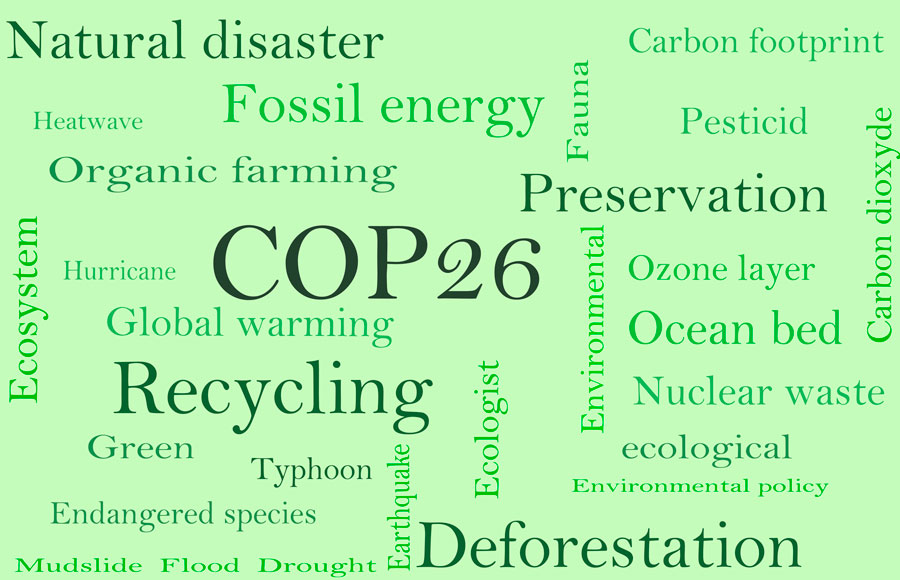
HERE we are thick in the middle of COP26. Social media has its eyes firmly fixed on all the planes and cars being flown in to talk about climate change.
Greenwashing is still abundant and you can see why many become apathetic to it all.
Without clear leadership and direction, which is congruent with the actions and values of a country, little will change.
On the one hand we say protect the climate and our world, on the other, we sign off world record arms deals.
This week Amnesty have pushed for the release of the lawyer Steven Donziger who acted against Chevron and won an historic $9.5 billion judgement for its mass industrial poisoning in the Amazon which ruined the lives of the indigenous people there.
He was then targeted and now jailed for six months in what was described as a ‘contempt of court’.
Amnesty and leading human rights groups around the world have called for his immediate unconditional release stating they need to: “Take the necessary measures to ensure that corporations can no longer abuse the justice system to target human rights defenders.”
COP26 hasn’t mentioned that from what I have seen so far.
COP26 and sustainable investment
In investment terms, what is it that investors want and can do? For the most part, ‘sustainability’ is the key term which covers everything.
Sustainability isn’t an asset class. It’s a thought process and way of life that starts with asking why we as population are doing what we are doing and whether it fits our values.
Investors are answering that and changing their actions. Investors are clearly seeing that those ‘above them’ aren’t paying attention to what matters and taking the relevant action themselves.
The UN 17 sustainable development goals target all of those key areas: No hunger, no poverty and equality are among the key targets, but others are all growing and are disruptive to the corporations who are causing the damage.
It says something as a society that we need to have ‘no hunger or poverty’ as a goal but it’s there now.
Some of these goals are listed under conspiracy theories around ‘great resets’. They are not and I wonder if the corporations about to lose out may be feeding that disinformation stream.
For many, the world has been broken for a long time. Corporations lobby their person into power and they deliver their policies.
The policies are for profit and the profit is often retained in non-tax paying havens. This starves society dry of the funding for healthcare, infrastructure and wellbeing for example.
That is a monetocracy not a democracy and the real politicians cannot participate in that democracy.
The fundamental disruption is that societies stop using their services entirely. At this point the returns from the investments and products make their way back into society and into society’s lake which has been left to run dry.
One of the key goals, for example, is that of sustainable cities which is very much under way. Sustainable means it funds itself.
Twenty five leading cities and five indigenous communities will implement all the sustainable development goals by as early as 2025 to prove it is possible.
The ease of which we can generate our own food and power is well known to the team and to the plans behind this.
This is, as I said above, a major disruptor which will significantly impact the profitability of the ‘dirty’ corporations. The Guardian had a write up recently called ‘The dirty Dozen: Meet America’s top climate villains’. It is compelling reading.
As investors leave corporations they are uncomfortable with, their share prices will crash and those investors who hold them unknowingly in passive investments will be hit the most, particularly as the funds then disinvest, causing the price to fall further.
The sustainable investor is seeking more about their positive impact than the negative impact they have on shares and by living a life in a way that matches their values, something it has been easy to forget.
It will be reflective in the share prices of those sustainable products and solutions that we turn to.
Our advisers are here to help you so please do get in touch. To contact our Northern Ireland office, call 028 6863 2692; our Cornwall office – 01872 222422 and you can reach our Southampton office on 023 8064 9674. If you prefer to email, please contact us on info@wwfp.net.
You can also join our social conversations on Twitter with Peter McGahan and Worldwide Financial Planning and you’ll find us on LinkedIN – Facebook and Instagram